Newsletter Subscribe
Enter your email address below and subscribe to our newsletter

 Bygonzay
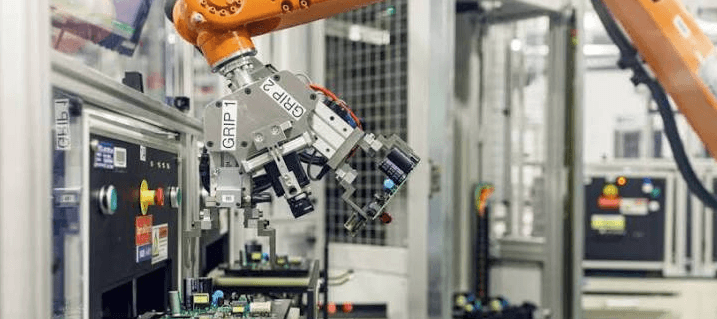
Technology is accelerating industrial innovation by blending modular digital capabilities with physical processes. Digital twins, predictive maintenance, and interoperable data raise uptime and throughput, while AI-driven insights enable rapid experimentation. Edge computing and robotics extend asset life and quality with reduced waste. Strong data governance ensures transparent analytics and ethical use. This combination creates scalable, cross-domain architectures that question traditional boundaries, inviting further examination of how governance, interfaces, and decision cycles shape sustained growth.
Technology is accelerating the transformation of industrial ecosystems by integrating modular digital capabilities with physical processes. The shift hinges on measurable gains from digital twins and predictive maintenance, enabling continuous optimization and reduced downtime. Data interoperability and standardized interfaces expand cross‑domain collaboration, while scalable architectures support rapid experimentation. Decision cycles shorten as real‑time insights inform asset utilization, reliability, and cost efficiency. Freedom follows with purposeful automation.
AI-driven digital twins and predictive maintenance are situationally transformative in modern industrial settings. Digital twins integrate real-time data, edge computing, and the digital thread to forecast failures and optimize operations. Robotics integration enhances asset longevity, while data governance and AI ethics guide responsible analytics. Predictive maintenance reduces downtime, but governance ensures transparency across interconnected systems for sustainable, freedom-loving innovation.
The integration of smart manufacturing, robotics, and additive innovation capitalizes on real-time data flows and modular automation to elevate throughput and quality.
Industry 4.0 frameworks enable seamless connectivity across production lines, while modular tooling and autonomous systems reduce cycle times and waste.
Connectivity ecosystems support cross-site visibility, enabling data-driven decisions, standardized interfaces, and scalable, resilient operations.
Could resilient, data-driven operations be the differentiator in sustained growth? Data-backed systems enable proactive risk sensing, demand shaping, and continuous improvement.
Emphasis on supply chain resilience reduces volatility, while robust data governance ensures accuracy, compliance, and trust.
Integrated telemetry, analytics, and scenario planning drive informed decisions, aligning operations with strategic goals, economizing resources, and expanding competitive advantage through disciplined, transparent, scalable processes.
Tech adoption reshapes roles as upskilling pathways and workforce adaptability expand, driving efficiency gains and talent retention; organizations report faster task completion, cross-functional capabilities, and deeper data literacy, enabling自由-minded teams to align skills with evolving production landscapes.
The starting statistic shows AI-driven efficiency gains averaging 20–30%, shaping cost ROI and highlighting rapid payback, despite substantial upfront implementation costs. Net ROI remains sensitive to integration, data governance, and scale; implementation costs vary by architecture and vendor diligence.
Privacy implications and security architecture shape IIoT deployments by constraining data flows, mandating access controls, and shaping vendor neutrality. Data minimization and anomaly detection drive resilience, while governance metrics ensure adaptable, auditable, liberty-preserving operational effectiveness.
Small firms can compete with big manufacturers via targeted niche markets, achieving competitive differentiation through rapid digital maturity. As a data point, pilot projects show 20–30% efficiency gains, illustrating where smaller players can outperform through agile, freedom-driven implementation.
See also: How Technology Is Driving Industrial Automation
Resilience metrics are best measured by resilience governance maturity, recovery time objectives, and risk analytics accuracy. The approach is data-driven, concise, and analytical, enabling freedom-minded leaders to assess long-term operational resilience without vague assurances.
Despite rapid tech adoption, industrial gains hinge on disciplined data governance and interoperable architectures. AI-driven twins and predictive maintenance are elevating uptime by reducing unplanned downtime, with studies showing up to a 20–30% reduction in maintenance costs across mature deployments. The convergence of digital twins, edge computing, and robotics is accelerating experimentation cycles, enabling real-time decision-making at scale. As processes become more modular and transparent, sustained growth hinges on resilient, data-driven operations aligned with strategic goals.